Feuds, Fate and Calfskin: Inside the Icelandic Sagas
Penned down centuries after early settlement, the family sagas and medieval eddas preserved northern myths, lineage feuds and poetic craft.
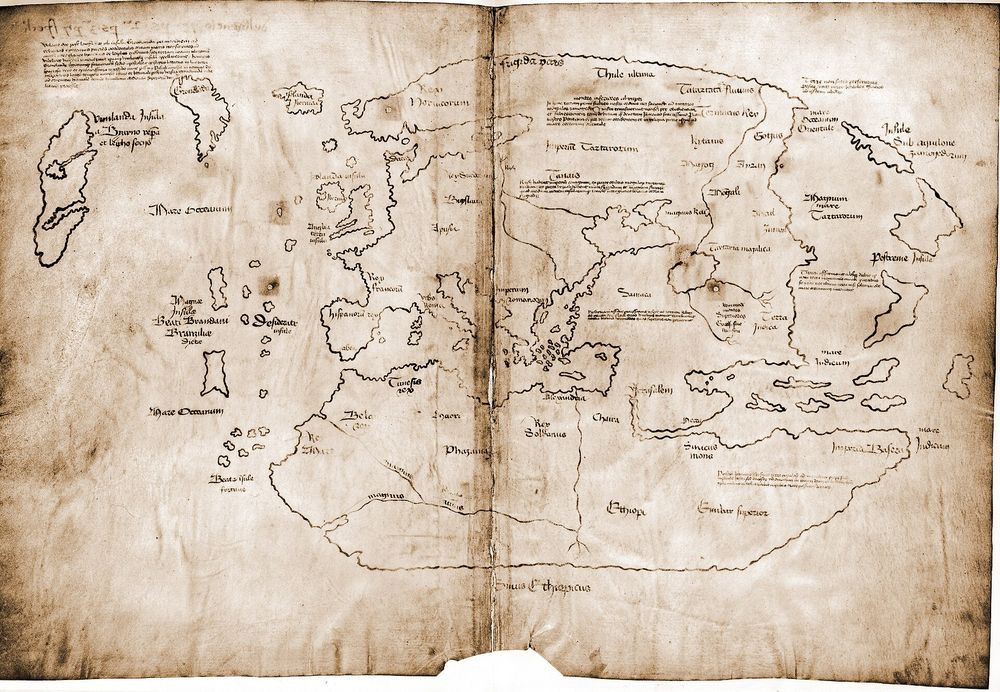
Centuries before the modern novel took shape, medieval Icelanders committed to calfskin an extensive corpus of prose narratives and mythic verses that chronicled their ancestors’ lives, vendettas and cosmology. The sagas of Icelanders—often referred to as family sagas or Íslendingasögur—recount the turbulent settling of Iceland during the ninth, tenth and early eleventh centuries, a period known to historians as the Saga Age, according to Wikipedia’s entry on the genre [1]. Rather than detached chronicles of distant royalty, these works documented the legal wrangling, blood feuds and genealogical lines of everyday settlers and local chieftains carving out an existence on an isolated North Atlantic island [1].
Most of these family sagas were recorded in the thirteenth and fourteenth centuries in Old Icelandic, a western dialect of Old Norse [1]. The individuals who transcribed and shaped them into prose remain largely anonymous [1]. While some scholars have suggested that the thirteenth-century scholar and chieftain Snorri Sturluson authored Egil’s Saga—a narrative focusing on his own ancestor—that attribution remains unresolved [1]. In the twentieth century, Icelandic scholar Sigurður Nordal proposed a five-stage chronology dividing the texts by literary development: works dealing with skalds from 1200 to 1230, family sagas from 1230 to 1280, style-focused masterpieces such as Njáls saga between 1280 and 1300, followed by fourteenth-century historical tradition and fiction [1]. Though critics such as Ármann Jakobsson and Yoav Tirosh have questioned Nordal’s framework as overly reliant on presuppositions about fantasy and realism, the sagas have endured as foundational European literature [1].
The Worlds of Prose and Verse
To fully appreciate the world of the sagas, readers encounter a parallel body of medieval lore: the Eddas. While the family sagas ground themselves in domestic disputes, land disputes and local law, the mythic background of northern culture was preserved in two monumental collections known as the Poetic Edda and the Prose Edda [2] [3].
The Poetic Edda is a modern title given to an untitled collection of anonymous Old Norse narrative poems composed in alliterative metres, such as fornyrðislag (“old story metre”) and ljóðaháttr (“song form”), according to Wikipedia [2]. Before being written down, these verses circulated orally as minstrel poetry for centuries, with dating criteria relying on archaic linguistic patterns such as the particle of and specific alliteration rules [2]. The primary surviving record of these mythological and heroic lays is the Codex Regius, a thirteenth-century manuscript discovered in 1643 by Bishop Brynjólfur Sveinsson, who mistakenly attributed it to the twelfth-century priest Sæmundr the Learned [2]. Brynjólfur sent the volume to the King of Denmark, and after centuries in the Royal Library in Copenhagen, the manuscript was returned to Iceland by naval ship in 1971 [2].
In contrast, the Prose Edda was designed around 1220 as a comprehensive textbook for aspiring skaldic poets [3]. Generally attributed to Snorri Sturluson, the work is divided into four sections: a Prologue offering a euhemerised Christian explanation tracing Norse gods to Trojan warriors; the Gylfaginning, which details Norse cosmology and the creation and destruction of the world; the Skáldskaparmál, which explores poetic diction and catalogues kennings; and the Háttatal, an examination of traditional metre and verse forms [3]. Seven primary manuscripts of the Prose Edda survive, with variations across the Codex Upsaliensis, Codex Wormianus, Codex Trajectinus and its own version of the Codex Regius [3]. The text helped keep alive complex metaphorical traditions that would otherwise have faded following the Christianisation of Scandinavia [3].
A Legacy of Narrative Realism
What distinguishes the Icelandic sagas from much of contemporary medieval European romance is their unflinching narrative eye [1]. While legendary sagas embrace monsters and outright magic, the family sagas focus on human fallibility, social breakdown and the legal mechanisms designed to halt cycles of vengeance [1]. Works such as Laxdæla saga, Gísla saga, Grettis saga and Hrafnkels saga present characters caught between personal honour and unavoidable tragedy, charting family disputes across generations [1].
That combination of psychological directness and formal restraint has exerted an enduring pull on modern literature. The stark imagery and stress-based alliterative metres preserved in the Codex Regius inspired writers such as August Strindberg, J. R. R. Tolkien, Ezra Pound and Jorge Luis Borges, according to the manuscript’s history [2]. Today, standard critical editions of the sagas continue to be produced by Hið íslenzka fornritafélag, the Old Icelandic Text Society, keeping the voices of the medieval North accessible centuries after they were set to vellum [1].