Treasure Island review: the adventure story that wrote the template
Robert Louis Stevenson's pirate novel gave us treasure maps, one-legged sea cooks and a boy narrator, and it is still a pleasure.
“Fifteen men on the dead man’s chest— Yo-ho-ho, and a bottle of rum!”[1] A chant from the first chapter, sung by a stranger at an inn, and a good deal of what we now think of as piracy was born in that rough rhyme. Robert Louis Stevenson did not invent pirates, but he gave them their voice.
What it is
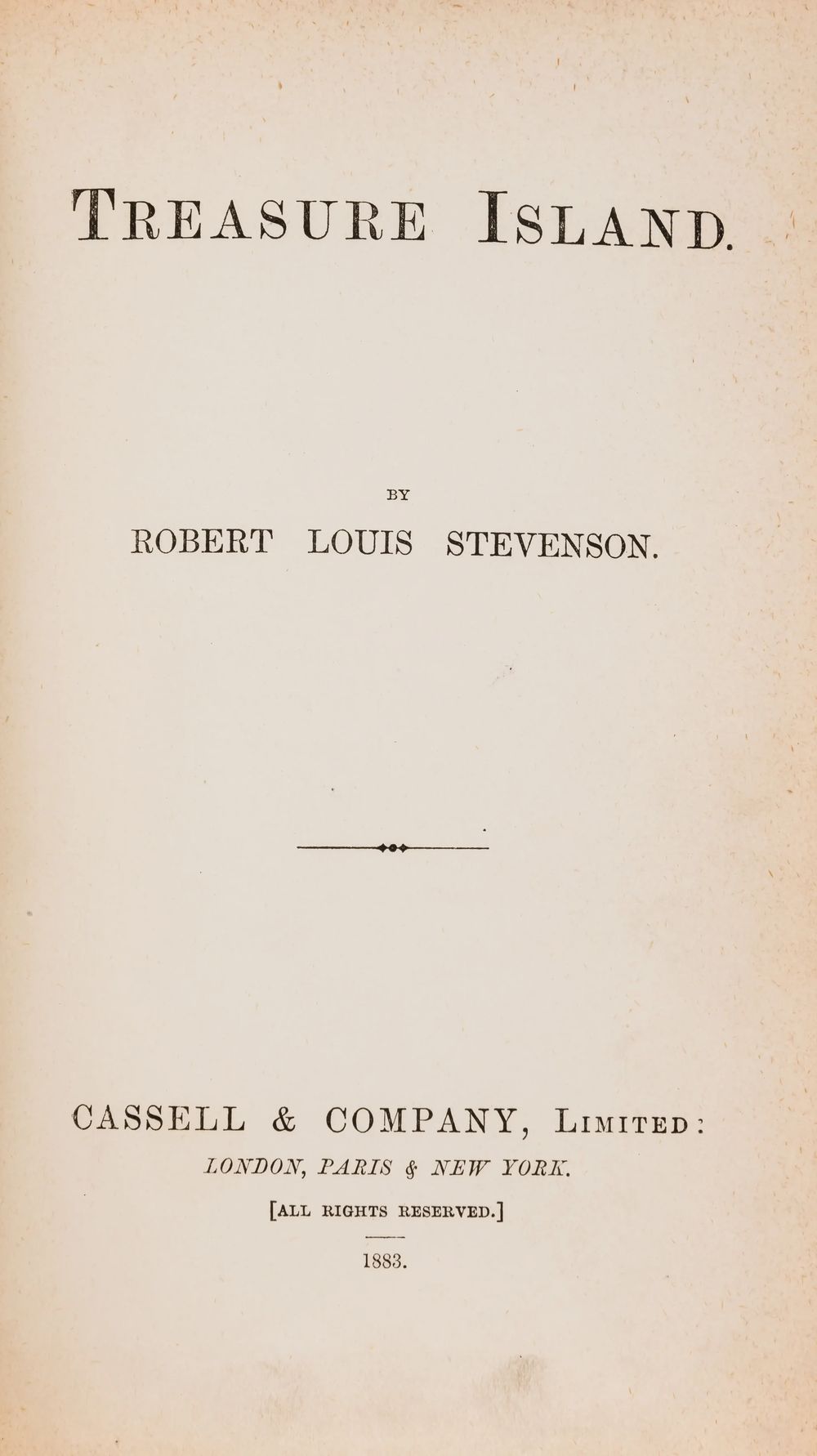
Treasure Island is an adventure and historical novel by the Scottish novelist Robert Louis Stevenson, published as a book on 14 November 1883 by Cassell & Co.[2] It is set in the 18th century and tells a story of buccaneers and buried gold. It appeared first as a serial from 1881 to 1882 in the children’s magazine Young Folks under the title Treasure Island or the Mutiny of the Hispaniola, and Stevenson’s working title had been The Sea Cook: A Story for Boys. The narrator is Jim Hawkins, a boy who lives at the Admiral Benbow Inn near Bristol, where a sinister old sailor takes a room.
Why it still works
Stevenson understood how to build tension in short chapters. Each ends on a hook, the language is simple and vivid, and the story never stops moving. His most famous character, a smiling sea cook, is one of the best-loved villains in English fiction precisely because he is charming; the book lets us like him and fear him in the same breath.
Jim’s narration gives the story an honest, slightly breathless quality. He is young, brave and sometimes foolish, and the book is wise enough to let us see his mistakes. It is a coming-of-age story noted for its atmosphere, its characters and its action, and it is a children’s classic that adults can read without condescension.
Reception and legacy
Since its publication Treasure Island has significantly influenced depictions of pirates in popular culture, including elements such as deserted tropical islands, treasure maps marked with an “X”, and one-legged seamen with parrots perched on their shoulders.[2] It has become one of the most often dramatised and adapted novels in English. That influence is a reason to read the original: the clichés are fresher on the page than in the pastiches they spawned.
What to know before you start
There is period language and some old-fashioned attitudes. The sea terms are plentiful, but context carries them, and a glossary in an annotated edition helps but is not required. The book is about 68,000 words, brisk for its length, and is well suited to reading aloud.
Questions readers ask
Is it a children’s book? It was written for boys and is read by all ages; it contains violence and menace but is told with warmth and humour.
Where did the “X marks the spot” idea come from? Treasure Island helped popularise the treasure map marked with an X, though it did not invent buried treasure.
Who is the narrator? A boy named Jim Hawkins.
Who it is for
Readers of all ages who love adventure, maps, ships and treasure; and anyone who wants to know where our pirate clichés came from.
Verdict
An adventure story so well made that it became the template for the genre, and it is still thrilling to read.