The Call of the Wild review: a short novel with a long cold shadow
Jack London's tale of a dog taken north in the Klondike Gold Rush is lean, vivid and surprisingly deep for its 32,000 words.
“Buck did not read the newspapers, or he would have known that trouble was brewing.”[1] The opening line sets the tone: wry, brisk and a little ominous. Jack London tells the story of a dog, and we feel at once that the dog will be treated with more seriousness than most people in fiction.
What it is
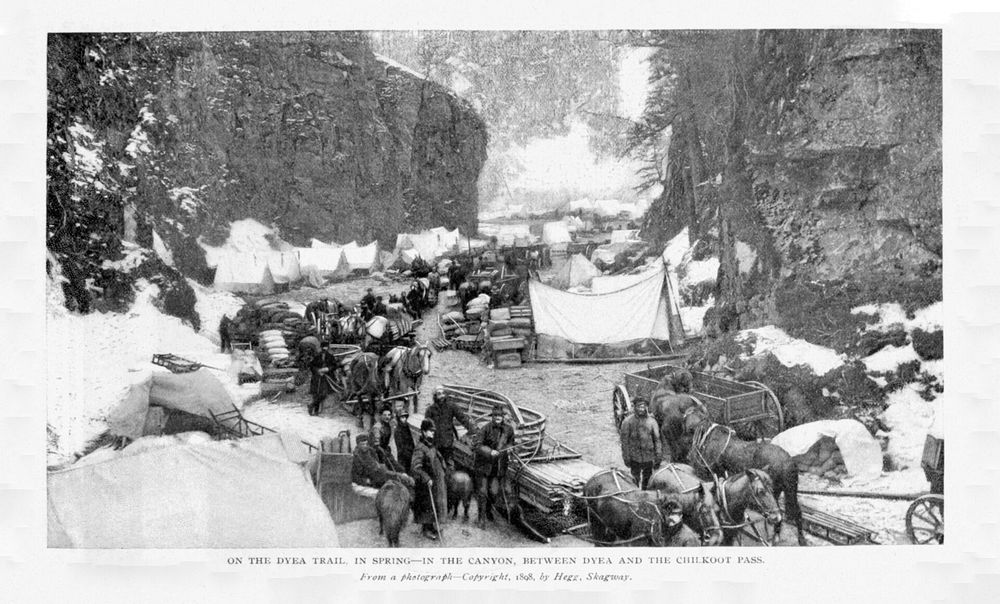
The Call of the Wild is an adventure novel by Jack London, published in 1903 and set in the Yukon during the 1890s Klondike Gold Rush, when strong sled dogs were in high demand.[2] The central character is a dog named Buck. The story opens on a ranch in the Santa Clara Valley, California, where Buck is stolen from his home and sold into service as a sled dog. London spent about a year in the Yukon, and his observations form much of the material for the book. It was serialised in The Saturday Evening Post in the summer of 1903 and published later that year as a book.
Why it still works
London writes the north as an environment that rearranges every living thing. The country is ruthless and beautiful, and the sentences move like the sleds they describe: short, driving and exact. He gives Buck an interior life without making him a cartoon, and the novel’s central question, what survives when civilisation is stripped away, never becomes a lecture. The story follows Buck as he becomes progressively more primitive and wild in a harsh environment where he must fight to survive.
It is also a masterclass in momentum. Chapters are brief, each one moves the dog to a new stage of his education, and the prose never lingers longer than it needs to. For a book more than a century old, it reads astonishingly fast, and its cold, snowbound landscapes are among the most vivid in American fiction.
Reception and legacy
The book’s great popularity and success made a reputation for London.[2] It was adapted to film as early as 1923, and it has been adapted many times since. Today it is read in schools and by adults who come to it for the survival story and stay for the writing, and it remains the best-known example of a literary tradition that treats the far north as both setting and force.
What to know before you start
The novel contains hard scenes of animal suffering and of the era’s rough treatment of working animals. It is not gratuitous, but sensitive readers should know. It also reflects some of the attitudes of its time; read it as a period piece with a timeless core. At about 32,000 words it can be finished in an evening or two.
Questions readers ask
Is it suitable for young readers? It is widely read by teenagers, though it contains violence and animal cruelty that some parents prefer to discuss first.
Where and when is it set? California at the start, then the Yukon and Alaska during the Klondike Gold Rush of the 1890s.
Is it told from the dog’s point of view? Largely, yes: the narrator follows Buck closely and gives access to his perceptions.
Who it is for
Readers who love survival stories, snow and wilderness settings, and short books with a strong spine; and anyone interested in the literature of the far north.
Verdict
Lean, wild and unexpectedly moving: a short novel whose cold stays with you long after you finish.