The Time Machine review: Wells at his most compact
H. G. Wells launched time travel as a modern genre in about 32,000 words, with a dinner-table argument and an idea that still feels alive.
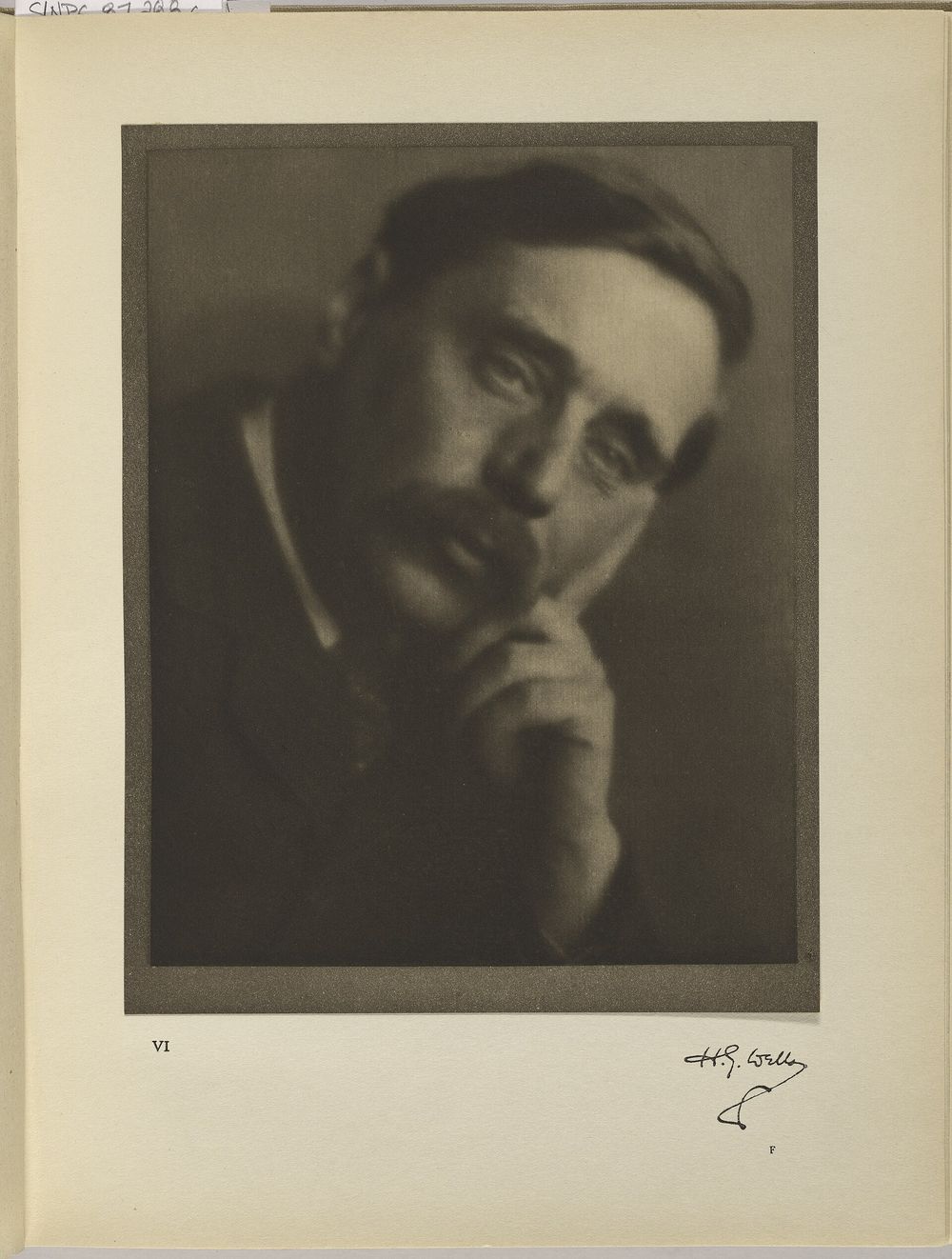
The Time Traveller tells his dinner guests that “Time is only a kind of Space.”[1] The sentence is typical of the book: a bold idea, delivered with a smile and a dinner-table pause. H. G. Wells does not begin with the machine. He begins with a conversation.
What it is
The Time Machine is an 1895 science-fiction novella by H. G. Wells about a Victorian scientist known as the Time Traveller, who travels to the year 802,701.[2] The work is generally credited with popularising the concept of time travel by means of a vehicle or device that moves intentionally and selectively forward or backward in time, and the term “time machine”, coined by Wells, is now used for any such device. It is told through a frame story set in then-present Victorian England: the Time Traveller recounts his journey to a circle of friends.
Why it still works
Wells treats the imagined future as an argument rather than a spectacle. The inventor looks at his world, extends its tendencies forward, and reports what he finds. That makes the novella feel like both an adventure and a piece of social thought: it is interpreted today as a commentary on the growing inequality and class divisions of Wells’s own era. It explains why later science fiction keeps returning to it.
The framing is smart, too. Because the story reaches us through a dinner guest’s retelling, we are invited to doubt as well as marvel. The prose is clean and brisk, the descriptions of unfamiliar landscapes are precise, and the pace never flags. It is a work of future history and speculative evolution that remains remarkably readable.
Reception and legacy
Wells’s invention of the “time machine” gave science fiction one of its most durable devices, and the novella has been adapted many times for film, television, radio and stage.[2] It is also one of the shortest of the great works of Victorian-era science fiction, which makes it an ideal first step into the genre.
What to know before you start
The book is short and the first chapter is mostly talk, but it sets up everything that follows. Do not skip it. Some of its social assumptions are very Victorian, and the book is best read with that in mind. It is about 32,000 words, so you can finish it in a single evening.
Questions readers ask
Did Wells invent time travel? Not the idea of travelling in time, but the idea of doing so deliberately with a machine; the phrase “time machine” is his.
Is it a novel or a novella? It is usually called a novella, a short novel of about 32,000 words.
Do I need to know the science? No; the book explains its idea at a dinner table in plain language.
Who it is for
Readers who like ideas, classic science fiction, or short novels that can be finished in an evening; and anyone who wants to see where time travel stories began.
Verdict
Compact, inventive and surprisingly modern in its method: the template for a genre in about thirty thousand words.