How the vinyl record outlasted the compact disc
Decades after the CD pushed records from the mainstream, vinyl has mounted an improbable resurgence driven by tactile appeal, collectors and pop blockbusters.
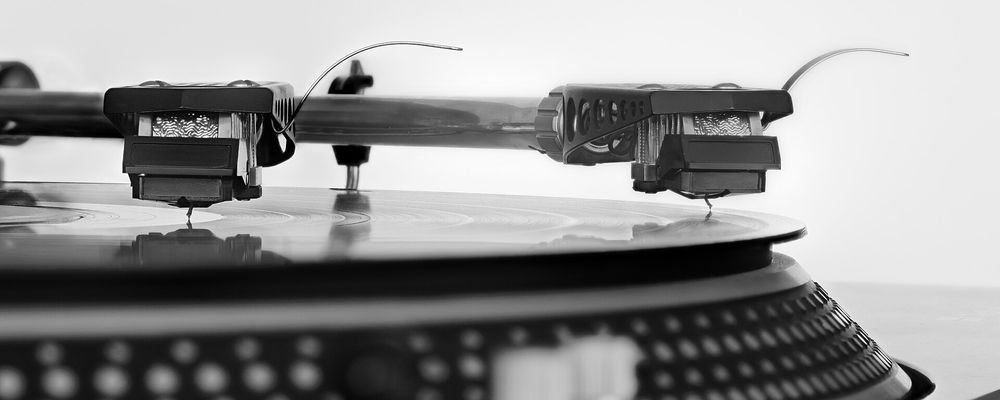
When the compact disc surged across the globe in the 1980s, the phonograph record appeared headed for obsolescence. Polyvinyl chloride discs, standard since 1958, were systematically removed from shop displays, and the record formally slipped out of mainstream retail by 1991 [1]. Major labels restricted return policies, penalising shops that held unsold vinyl and prompting pressing plants worldwide to shut their doors [2].
Yet several decades later, the analogue platter has completed one of the most unexpected comebacks in cultural history. By 2022, according to the Recording Industry Association of America (RIAA), vinyl revenues in the United States reached $1.2 billion, outselling compact discs in units—44 million against 33 million—for the first time since 1987 [2]. What began in the late 2000s as a specialist interest among DJs, indie rockers and audiophiles has grown into an enduring commercial phenomenon.
The long eclipse
Commercial disc records date back to Emile Berliner’s experiments in the 1880s [1]. Over the course of the 20th century, formats shifted from heavy, brittle 78 rpm shellac discs to 33⅓ rpm long-playing records (LPs) and 45 rpm singles introduced in the late 1940s [1]. For four decades, vinyl served as the central vehicle for recorded music [2].
That reign ended when digital optical media arrived. Compact discs delivered pristine, noise-free playback and durable convenience, stripping vinyl of its commercial dominance [2]. Through the 1990s and early 2000s, records were kept afloat primarily by electronic dance music DJs, specialized collector circles and independent rock acts [1] [2]. In Germany, for instance, a 1990s techno boom briefly elevated vinyl back into club culture before many specialist shops shut in the early 2000s [2]. Between 2003 and 2008 alone, more than 3,000 independent record shops closed across the United States [2].
Tactile music in an intangible era
The turnaround began around 2007 [2]. As digital downloads and streaming platforms replaced physical ownership with frictionless access, an appetite emerged for the opposite experience [2].
Unlike an invisible audio stream, a vinyl record demands active physical involvement. Listeners handle the disc, read expansive 12-inch sleeve artwork and lower a stylus into microgrooves [1] [2]. While compact discs reproduce sound with greater measurable accuracy and lack surface noise, many listeners actively prefer the subjective character of analogue playback [2]. As Adriaan Neervoort, owner of Wanted Music in Beckenham, Kent, observed to the BBC:
“Vinyl has a more engaging human sound, it comes beautifully packaged. People want to know more about music and they want to engage with it more.”
Streaming services paradoxically accelerated this behaviour. Rather than cannibalising record sales, platforms like Spotify and Apple Music introduced listeners to sprawling catalogues, after which fans sought physical copies of albums they discovered online [2]. Annual events such as Record Store Day, established to support independent shops, further galvanised interest with exclusive pressings [2]. In the United Kingdom, where the British Phonographic Industry (BPI) recorded consecutive annual sales increases beginning in 2007, vinyl records had become culturally established enough by 2024 to be re-added to the Office for National Statistics basket of goods used to track national inflation [2].
Pop variants and manufacturing hurdles
While early phases of the revival were sustained by rock and catalogue reissues—such as David Bowie’s Blackstar, which led UK vinyl sales in 2016—the recent boom has been propelled by contemporary pop [2].
Taylor Swift became a prominent engine of the format’s growth [2]. In 2021, Swift accounted for 2.6% of all vinyl album sales in the United States, and by 2022 her LP Midnights sold 945,000 copies in the US, making it the highest-selling vinyl title in a single year since Luminate Data began tracking in 1991 [2]. Subsequent releases continued the pattern, with her 2024 album The Tortured Poets Department moving 859,000 LPs in its opening week [2].
This modern market relies heavily on physical collectability. Record companies increasingly release numerous variants of a single title featuring distinct vinyl colour pressings, alternative sleeve art and bonus audio tracks [2]. According to Luminate, top-ten Billboard albums averaged 8.9 physical variants in 2023, up from 3.3 in 2019 [2].
This rapid expansion has tested an industry that had largely scrapped its vintage equipment. In June 2017, when Sony Music announced it would resume in-house vinyl pressing after a 29-year hiatus, the BBC reported that the company struggled to recruit technicians familiar with historic lathe and press operations [2].
Despite this momentum, vinyl remains a niche within the overall music ecosystem. In 2020, vinyl accounted for 5.1% of total US music revenues, overshadowed by streaming subscriptions, and stood at 8% in 2023 [2]. In major music markets like Japan and Germany, compact discs have retained a significantly higher market share [2]. Even so, the format once written off as obsolete has secured a permanent place in modern music culture, proving that physical ownership still holds value in a digital world [2].