How a symphony orchestra is organised
From strings and woodwinds to the conductor on the podium, here is how a modern symphonic ensemble arranges its players and sections.
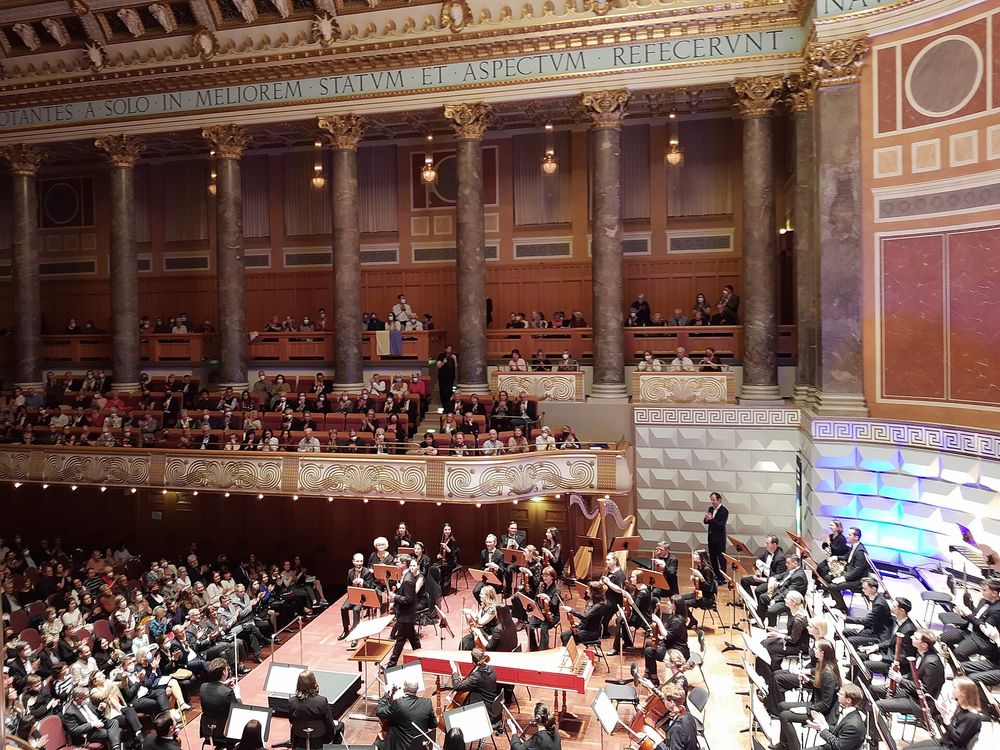
A full symphony orchestra brings dozens of instrumentalists together into a single, coordinated ensemble. While early musical ensembles varied widely across regions, the modern orchestra operates through four primary instrument families, directed by clear lines of musical leadership on the concert stage.[1]
According to Wikipedia’s survey of orchestral history, a standard symphony orchestra or philharmonic orchestra usually maintains more than 80 musicians on its roster, with actual performance forces ranging from 70 to over 100 depending on the piece and venue.[1] Smaller ensembles, known as chamber orchestras, generally feature no more than around 50 players.[1]
The four instrument families
The organisation of the ensemble rests on four distinct instrument families, occasionally supplemented by keyboards and auxiliary instruments:
- Strings: Forms the numerical core of the orchestra. It comprises first and second violins, violas, cellos (violoncellos), and double basses.[1] Modern symphonic layouts often include 16 first violins, 14 second violins, 12 to 14 violas, 10 to 14 cellos, and six to eight double basses, alongside one or two harps.[1]
- Woodwinds: Typically seated behind or adjacent to the front strings, this group includes flutes, oboes, clarinets, and bassoons.[1] Players frequently double on related instruments, such as the piccolo, cor anglais, bass clarinet, and contrabassoon.[1]
- Brass: Positioned towards the rear to balance their acoustic power, the section standardly features French horns, trumpets, tenor and bass trombones, and the tuba.[1] Certain late Romantic and modern works call for additions such as the euphonium or Wagner tuba.[1]
- Percussion: Placed at the very back of the stage. The section centres on timpani—customarily handled by a dedicated player managing four to five drums—alongside unpitched and pitched instruments including the snare drum, bass drum, cymbals, triangle, tam-tam, glockenspiel, and xylophone.[1]
Keyboard instruments such as the piano, celesta, harpsichord, or organ may appear either within an occasional fifth keyboard section or as standalone solo instruments.[1] When scores demand unusual additions—such as saxophones, electric instruments, or specific ethnic percussion—orchestras typically hire freelance musicians on contract to augment their permanent ranks.[1]
Leadership on and off the podium
Coordination across such a large body requires distinct leadership roles. Orchestras are led by a conductor, who uses arm and hand gestures—frequently amplified by a short baton—to direct the performance.[1] According to Wikipedia, the conductor “unifies the orchestra, sets the tempo, and shapes the sound of the ensemble.”[1] In addition to live direction, the conductor leads rehearsals prior to concerts, guiding the musicians in interpreting the score.[1]
Within the playing ranks, the principal player of the first violin section holds the position of concertmaster, referred to as the leader in British parlance.[1] The leader assists in directing the players and serves as a vital conduit between the ensemble and the conductor.[1] This role reflects orchestral roots; in the Baroque era between 1600 and 1750, ensembles were frequently directed directly by the concertmaster or by a musician playing basso continuo chords from a harpsichord or organ.[1]
Seating and stage arrangement
While precise stage configurations vary between ensembles and concert halls, orchestras generally arrange instruments in concentric tiers radiating from the podium.[1] The strings occupy the front and sides closest to the audience, arranged in semicircular arcs.[1] A common arrangement places the first and second violins on the conductor’s left and centre-left, with violas and cellos towards the centre and right, and double basses anchored along the right periphery.[1]
The woodwinds sit in rows directly behind the central strings, providing immediate acoustic presence without overwhelming softer instruments. The brass instruments sit behind the woodwinds, raised towards the rear of the stage, while percussion occupies the rear perimeter, allowing the sound of drums and metal instruments to project cleanly over the entire ensemble.[1]