The Picture of Dorian Gray review: Wilde's glittering warning
Oscar Wilde's only novel mixes epigram and unease: a dazzling book that is also a quiet argument about beauty and consequence.
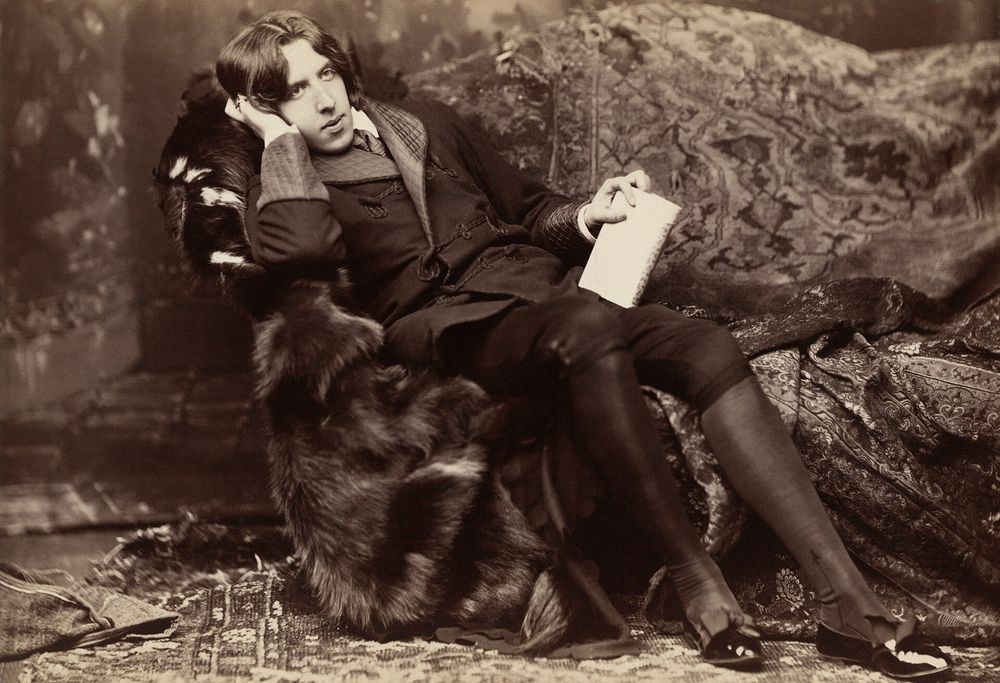
“There is no such thing as a moral or an immoral book. Books are well written, or badly written. That is all.”[1] That is Wilde in the preface, throwing down a challenge before the story has begun. Then he writes a novel that is perfectly well written, and perfectly moral in its own unsettling way.
What it is
The Picture of Dorian Gray is Oscar Wilde’s only novel. A shorter, novella-length version appeared in the July 1890 issue of the American periodical Lippincott’s Monthly Magazine, and the novel-length version was published in April 1891.[2] A young man of striking beauty is painted by an artist, Basil Hallward, who is infatuated with him; he falls under the influence of the aristocrat Lord Henry Wotton and makes an impulsive wish about the portrait, which the book then takes seriously.
Why it still works
Wilde gives us two pleasures at once. The first is surface: the drawing-room banter, the aphorisms, the descriptions of flowers and rooms and clothes. The second lies beneath, and it comes from the way that very surface starts to feel like a trap. Lord Henry’s conversation is seductive, and the book shows us what it costs to take that seduction as a way of life. Wilde never lectures; he lets wit do the moral work, and that is why the warning lands.
The three principal characters are drawn with real economy: the painter who loves too much, the aristocrat who talks too well, and the young man between them. Their scenes together are among the best conversations in Victorian fiction, and they are the reason the early chapters, though talky, are never dull.
Reception and legacy
The novel is widely regarded as a classic of both Gothic and English literature, and it has been adapted many times for film, stage and other forms of performance.[2] It is usually described as a work of philosophical and Gothic fiction in the decadent tradition: a story in which an idea (that beauty and sensation are the only things worth pursuing) is tested against its consequences.
What to know before you start
Expect talk before action. The early chapters are conversation-heavy and the plot picks up later, though the dialogue is the reason to be there. Editions often include both the 1890 and the 1891 texts; the longer 1891 version is the one most readers know. It runs to roughly 80,000 words and is easy to read in short sessions. If you enjoy the Gothic strain, our reader’s guide to Dracula is a natural next step.
Questions readers ask
Is it a horror novel? It has horror at its centre, but it is delivered through wit, conversation and slow dread rather than shocks.
What is the preface for? It is Wilde’s declaration of aestheticism; the short, famous sentences are his defence of art against moral judgement.
Which version should I read? The 1891 novel-length version is the standard text.
Who it is for
Readers who enjoy epigrams and decadence, fans of Gothic fiction, and anyone curious about how a book can be witty and disquieting in the same paragraph.
Verdict
Brilliant, brittle and unexpectedly serious: a glittering book with a shadow it cannot shake.