A Reader's Guide to Bram Stoker's Dracula
How an overworked London theatre manager assembled folklore, travel accounts and stage charisma into an enduring Gothic masterpiece.
When Dracula was published in London in late May 1897, its author was far better known as a theatrical administrator than as a master of terror [1]. Bram Stoker served for 27 years as the business manager of the West End’s Lyceum Theatre and personal assistant to Sir Henry Irving, the premier Shakespearean actor of the late Victorian stage [2]. Writing fiction late at night or during summer holidays, Stoker produced a novel that reshaped global popular culture without bringing its creator significant wealth during his lifetime [1].
Unlike modern screen treatments that focus purely on a romantic antihero, Stoker’s original work functions as a polyphonic mystery. Assembled through fictional diary entries, letters, telegrams, and newspaper clippings, the narrative slowly documents a foreign invasion of late Victorian Britain [1][2]. Readers approaching the classic today find a book rooted as much in contemporary travelogues and modern technology as in regional folklore.
The theatrical manager and the library
Born in Clontarf, Dublin, in 1847, Stoker spent his first seven years bedridden with an undiagnosed illness before recovering to become a university athlete at Trinity College Dublin [2]. He worked a decade in the Irish civil service and reviewed plays for the Dublin Evening Mail before Irving hired him in 1878 to oversee the Lyceum [2]. In that demanding post, Stoker coordinated touring schedules, entertained London high society, and accompanied Irving across North America [1][2].
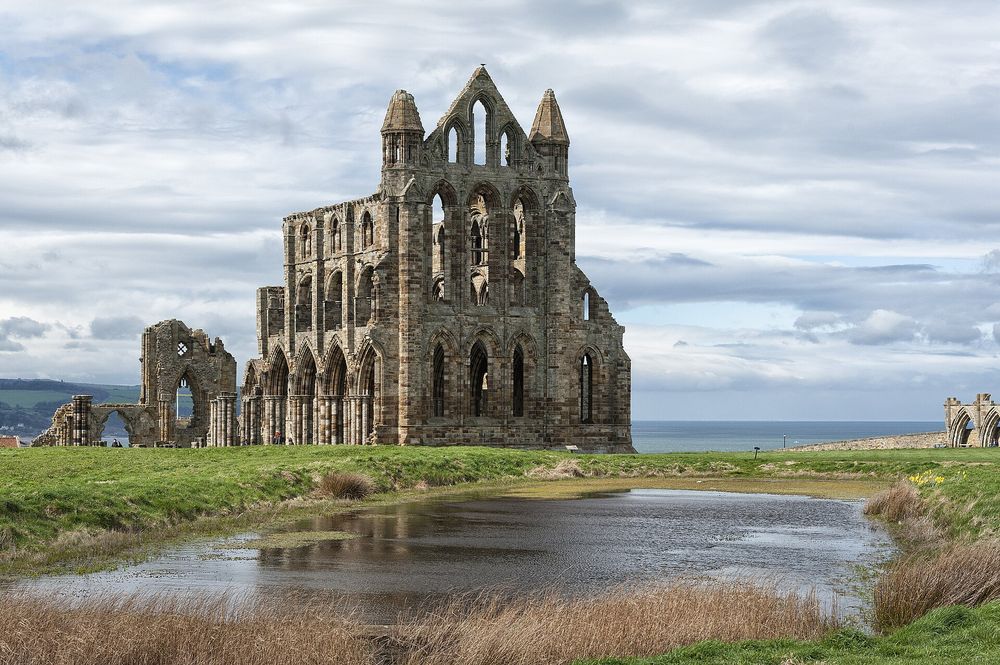
Despite the long hours, Stoker maintained a rigorous regimen of reading. Between 1890 and 1896, he gathered more than 100 pages of notes, working primarily at the London Library and during seaside stays in Whitby and Scotland’s Cruden Bay [1]. The physical landscape of Cruden Bay, alongside Slains Castle and its octagonal hall, provided visual palettes for Castle Dracula [2].
While popular myth suggests Stoker based his vampire entirely on the Wallachian ruler Vlad III, Dracula scholar Elizabeth Miller points out that Stoker borrowed little more than the moniker and fragmentary historical details, finding the word in William Wilkinson’s 1820 account of Wallachia and Moldavia [1]. Instead, scholars widely identify Irving himself—with his imposing presence, aquiline features, and dramatic magnetism—as a primary visual and psychological model for the Count [1].
Structure and Victorian anxieties
The story opens with English solicitor Jonathan Harker travelling to Transylvania on legal business, only to discover the terrifying nature of his host [1]. Yet the novel rarely lets the Count speak for himself. Stoker relies on multiple narrators—including Harker, his fiancée Mina Murray, and Dr John Seward—creating what critic David Seed observes as an epistolary structure that distances the audience while offering tantalising glimpses of the villain [1].
By transporting an ancient menace onto the shores of Whitby and into the suburbs of London, Stoker subverted older Gothic conventions that kept supernatural terrors confined to distant medieval castles [1]. The book engaged directly with late 19th-century preoccupations, including changing gender roles, technological progress, psychiatry, and deep anxieties over national decline [1].
Reception and legacy
Archibald Constable and Company published Dracula in yellow cloth with red lettering at a price of six shillings, probably on 26 May 1897 [1]. Initial reviews were largely appreciative. The Daily Telegraph called it the best vampire story ever written, while Arthur Conan Doyle wrote privately to Stoker praising the characters [1]. Other reviewers found the sheer volume of gruesome incidents overwhelming, with The Manchester Guardian noting its capacity to entertain while cautioning that the author had indulged in too much horror [1].
Stoker earned no royalties on the first thousand copies, and the novel did not achieve modern commercial dominance before his death in London in April 1912 [1][2]. However, flawed copyright filings in the United States left the text in the American public domain during the 20th century, prompting a deluge of stage and screen adaptations [1]. With hundreds of dramatic portrayals since its debut, Stoker’s novel remains continuously in print—a foundational text whose dread and narrative innovation continue to reward first-time readers [1].