How the Booker Prize Works
From eligibility rules and panel reading marathons to high-profile disputes, here is how Britain’s most prestigious fiction award operates.
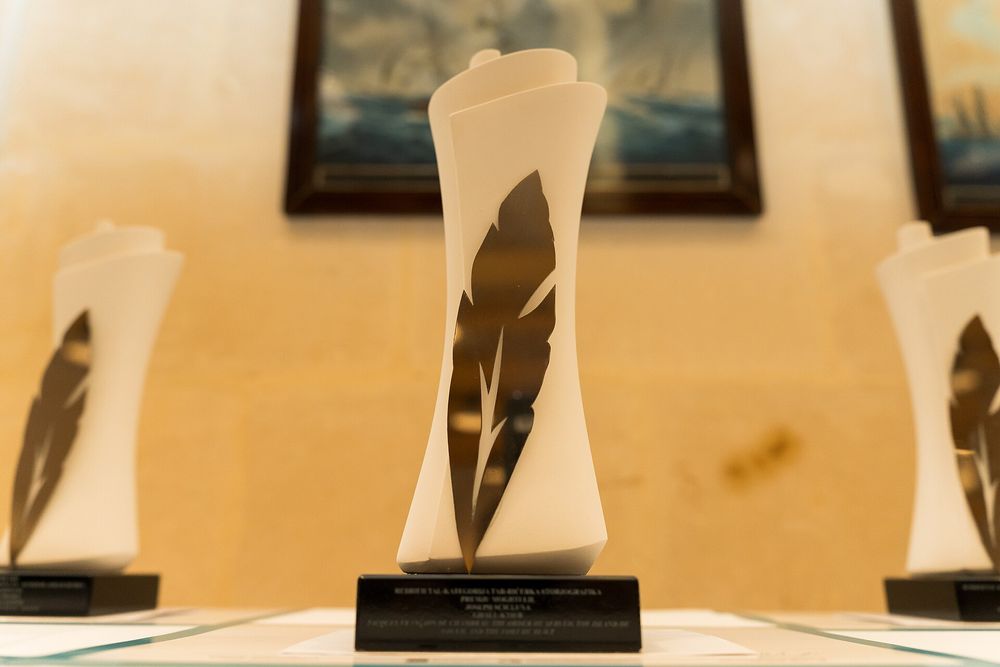
According to Wikipedia records, the announcement of the Booker Prize commands global literary attention, driving substantial book sales and fierce debate across the publishing industry [1]. Established in 1969, the prize honours the finest single work of sustained fiction written in English and published in the United Kingdom or Ireland [1]. The winning novelist receives £50,000, while each shortlisted writer is awarded £2,500 and an individually bound edition of their book [1].
Yet behind the black-tie ceremonies and commercial triumphs lies a rigid, exhausting administrative process—one that has evolved significantly over more than five decades [1].
Eligibility and the 2014 rule change
When the award was created by Booker, McConnell Ltd in 1969, eligibility was strictly restricted to citizens of the Commonwealth, the Republic of Ireland, and South Africa, with Zimbabwean authors included later [1].
That geographic restriction ended in 2014, when the Booker Prize Foundation expanded eligibility to any novel written in English and published in the UK or Ireland, regardless of the writer’s nationality [1]. The decision triggered considerable controversy within British publishing [1]. Critics, including former winner A. S. Byatt, warned that opening the gates risked diluting the prize’s distinct character and homogenising contemporary literature through an influx of American releases [1]. Conversely, other literary figures, such as former judge A. L. Kennedy, welcomed the widening scope [1]. In 2016, Paul Beatty became the first American author to take the award, followed by George Saunders in 2017 [1].
Short-story collections are excluded from the main Booker Prize, with Alice Munro’s The Beggar Maid in 1980 standing as the sole exception ever shortlisted [1]. Collections in translation are, however, eligible for its companion award, the International Booker Prize [1].
The judging marathon
The selection of the winner rests entirely with an independent panel of five judges appointed annually by the Booker Prize Foundation [1]. Chosen by the foundation’s chief executive in consultation with an advisory committee of senior publishing figures, the panel typically brings together authors, literary critics, academics, and figures from the wider arts, including actors and musicians [1].
Unlike many other literary accolades where duties are divided, Booker judges are expected to read every single submission [1]. In 2023, the panel assessed 163 books over seven months [1]. The process moves through three rigorous stages:
- The judges read all submitted entries and compile a longlist of 12 or 13 titles, established since 2001 and commonly dubbed the “Booker Dozen” [1].
- The panel re-reads the longlisted works before narrowing the field to a shortlist of six finalists [1].
- After reading the six shortlisted books for a third time, the judges meet to select the ultimate winner [1].
The immense reading load has drawn criticism over the decades. Novelist Amit Chaudhuri called the requirement to finish almost a book each day absurd, while Julian Barnes once famously referred to the selection mechanism as “posh bingo” before later winning the prize in 2011 [1].
Splitting prizes and breaking rules
The Booker has often been defined by internal rebellion and jury deadlocks [1]. In 1992, after the panel divided the award between Michael Ondaatje’s The English Patient and Barry Unsworth’s Sacred Hunger, the foundation introduced a strict rule making a joint win impossible [1].
That mandate lasted until 2019, when the jury chaired by Peter Florence openly defied the foundation’s executive team [1]. After being told explicitly that the rules forbade ties, the judges refused to separate Bernardine Evaristo’s Girl, Woman, Other and Margaret Atwood’s The Testaments, ultimately forcing a shared prize [1]. Evaristo became the first Black woman to win the Booker, while Atwood became its oldest recipient at 79 [1].
A changing family of prizes
The main award is part of a wider ecosystem overseen by the Booker Prize Foundation, a registered charity that took control in 2002 [1]. Long sponsored by the investment firm Man Group, the prizes have been backed by the charitable foundation Crankstart since 2019 [1].
Its sister award, the International Booker Prize, was introduced in 2005 [2]. Originally presented every two years for an author’s lifetime body of work, it was reconfigured in 2016 into an annual prize for a single novel or short-story collection translated into English and published in the UK or Ireland [2]. Its prize purse is divided evenly between the author and the translator [^1, ^2]. In 2025, the foundation also introduced the Children’s Booker Prize, with its first winner scheduled to be announced in 2027 [1].