How the Men's World Cup Grew from 13 Teams to 48
Across nearly a century, international football's premier showpiece expanded from a fraught gathering in Montevideo into a global fixture.
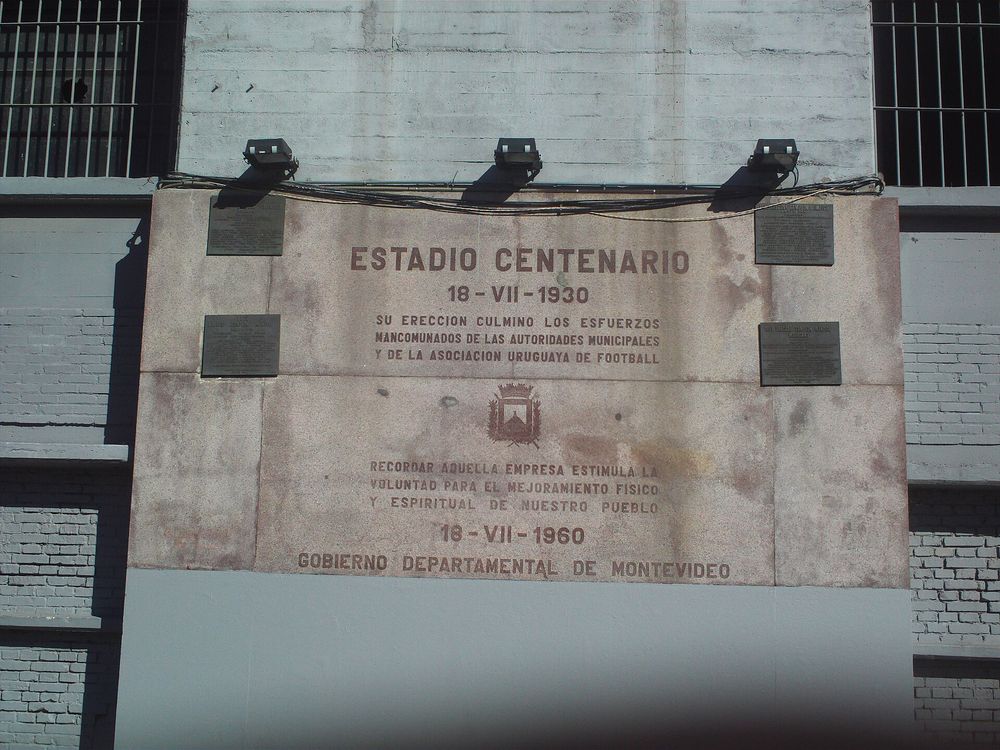
When the inaugural World Cup began in Montevideo on 13 July 1930, the entire enterprise hung by a thread, according to Wikipedia’s records of the tournament[1][2]. The French administrator Jules Rimet, who served as president of the Fédération Internationale de Football Association (FIFA) from 1921 to 1954, had spent years persuading sceptical member associations that an independent world championship could work outside the Olympic framework[1][2]. With the Great Depression under way, European nations balked at the transatlantic voyage, and no European side agreed to attend until two months before kickoff[1][2].
Only 13 nations contested that first tournament: seven from South America, two from North America, and four from Europe, with Rimet personally persuading Belgium, France, Romania, and Yugoslavia to make the journey[1]. Lucien Laurent of France scored the first goal in the competition’s history during a 4–1 win over Mexico, before hosts Uruguay beat Argentina 4–2 at the Estadio Centenario to claim the title in front of 93,000 spectators[1][2]. Across the subsequent 23 editions, that modest gathering grew into the most watched sporting event on the planet, eventually expanding to 48 finalists for the 2026 tournament[1].
Interwar friction and wartime hiatus
The road to establishing the tournament had been tentative, according to Wikipedia’s account of early international football[1][2]. The first official international match had taken place in Glasgow in 1872 between Scotland and England, and while the Olympic Games staged official football contests in 1908 and 1920, those remained strictly amateur affairs[1][2]. By 1928, the FIFA Congress in Amsterdam formally decided to stage an open world championship, choosing Uruguay as the host to mark its centenary of independence[1].
Yet early editions were repeatedly undermined by logistics and political standoffs, according to Wikipedia[1][2]. After European teams largely stayed away in 1930, Uruguay boycotted the 1934 tournament in Italy, marking the only occasion when the holders declined to participate in the following finals[2]. Travel costs and boycott threats thinned the field again in France in 1938, where Austria withdrew following the Anschluss, leaving just 15 teams[2].
Plans for tournaments in 1942 and 1946—sought by bidders including Germany and Brazil—were abandoned following the outbreak of the Second World War in September 1939[1][2]. FIFA lacked the money and personnel to organise a peacetime tournament immediately after hostilities ceased in 1945, and the competition resumed only in 1950 in Brazil[1][2]. That tournament saw the return of British associations, who had left FIFA in 1920, and ended with Uruguay’s famous 2–1 victory over the hosts at the Maracanã before roughly 200,000 spectators[1][2].
The 16-team era and continental barriers
Between 1934 and 1978, the final tournament settled on a standard quota of 16 participants, with rare exceptions caused by late withdrawals, according to Wikipedia[1]. During this four-decade period, the competition remained heavily concentrated among European and South American sides[1].
Teams from other confederations faced formidable hurdles to secure entry[1][2]. In the qualifying rounds for the 1966 tournament in England, African nations staged a collective withdrawal to protest against FIFA allocating just one shared finals berth for Asia, Oceania, and Africa combined[2]. Until 1982, only four sides from outside Europe and South America managed to advance past the initial round: the United States in 1930, Cuba in 1938, North Korea in 1966, and Mexico in 1970[1].
Expansion across continents
Pressures to reflect the sport’s global reach forced structural changes to the format, according to Wikipedia[1]. The tournament field expanded to 24 teams for Spain 1982, an adjustment that immediately broadened access for countries across Africa, Asia, and the Americas[1]. Tunisia had already registered Africa’s first match win at a finals in 1978, beating Mexico 3–1, and the extra berths paved the way for deeper runs by non-traditional powers, such as Cameroon’s progress to the quarter-finals in 1990[1][2].
In 1998, FIFA increased the field again, moving to 32 finalists for France 1998[1]. By the time qualifying concluded for the 2010 tournament in South Africa, a record 204 countries had registered to compete in preliminary rounds overseen by six continental confederations[1]. South Korea reached the semi-finals on home soil in 2002, while Morocco became the first African team to reach fourth place at the 2022 tournament in Qatar, where engagement reached an estimated 5 billion people[1].
On 10 January 2017, the governing body confirmed another structural leap, ratifying a 48-team format that took effect for the 2026 edition won by Spain[1]. From a single stadium in Montevideo contested by 13 invited nations, the tournament developed into a multi-continental operation requiring years of qualification across hundreds of associations[1].