From Chaturanga to the Supercomputer: A History of Chess
Across fifteen centuries, an ancient Indian military simulation travelled across continents and adapted to new cultures before entering an era of digital dominance.
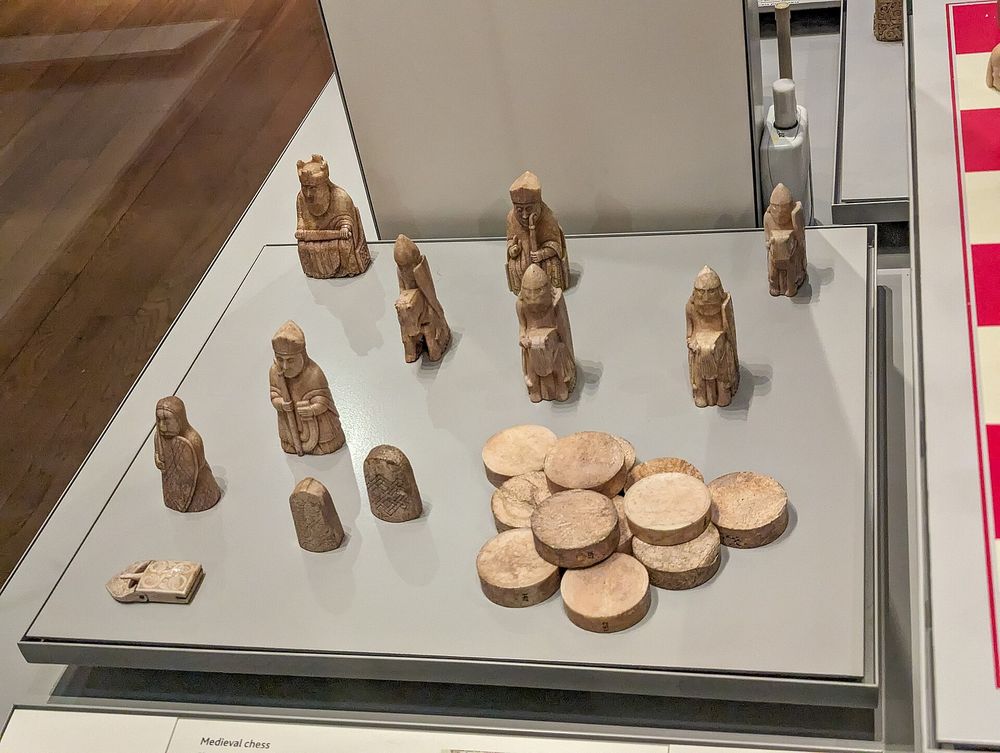
The game of chess has evolved across nearly 1,500 years, transforming from an ancient military strategy simulation on the Indian subcontinent into a global pastime governed by supercomputers and international grandmasters. While the modern rules stabilised in Europe around the close of the fifteenth century, the core identity of the pastime—distinguished by pieces bearing disparate movements and an objective decided by trapping a single royal piece—dates back to antiquity [1].
Tracing the lineage of the board reveals how imperial trade, cultural shifts and religious interpretations altered the nature of play long before digital engines began calculating millions of positions per second [1].
Ancient Roots and the Persian Court
According to historical records documented by Wikipedia, the earliest confirmed ancestor of the game flourished in India by the sixth or seventh century CE under the name chaturanga [1]. The Sanskrit term translates literally to “four divisions (of the military)”, representing the standard arms of ancient Indian warfare: infantry, cavalry, elephantry and chariotry [1]. In gameplay, these military branches corresponded respectively to the early counterparts of pawns, knights, bishops and rooks [1]. The pastime was contested on an uncheckered eight-by-eight grid known as an ashtāpada, a board previously utilised for race games played with dice [1].
From India, the contest crossed borders into Sassanid Persia around 600 CE, where it entered courtly circles under the name chatrang [1]. In Persian aristocratic society, learning the pastime became a staple of noble education [1]. It was during this Persian period that players established key linguistic traditions, calling “Shāh!” when attacking the opponent’s king and “Shāh Māt!” when the king was attacked and could not escape, exclamations that gave rise to the modern concept of checkmate [1].
Following the Arab conquest of Persia, the Islamic world adopted the pastime as shatranj [1]. Because early Islamic conventions strictly prohibited lifelike representations of humans and animals in art, the ornate, realistic figurines favoured in India yielded to carved abstract stone and clay shapes [1].
Migration Across Continents
As trade routes flourished, the game spread outward along multiple geographical pathways [1]. Travellers, Buddhist pilgrims and traders transported early variants eastward, where the format underwent structural changes [1]. In China, it influenced xiangqi, played on line intersections rather than inside squares and split by an uncheckered central “river” [1]. In Japan, it evolved into shogi, characterised by a larger board and the eventual adoption of rules permitting players to drop captured opponent pieces back onto the board as their own forces [1].
Westward expansion carried shatranj throughout North Africa and into Europe, arriving via the Iberian Peninsula under Moorish rule during the tenth century and through the Emirate of Sicily [1]. The thirteenth-century Spanish manuscript Libro de los juegos, commissioned under King Alfonso X, provided one of the earliest extensive European documents detailing board play, capturing the game’s continental transition alongside backgammon and dice [1]. By roughly 1500 CE, European players had substantially accelerated the pace of the game by expanding the movements of the queen and bishop, establishing the basic parameters seen in contemporary sets [1].
The Tournament Era and Artificial Intelligence
In the late eighteenth century and through the 1880s, European play was dominated by the so-called Romantic style, where competitors favoured sudden tactical sacrifices and quick direct attacks over slow positional calculation [1]. This period eventually ceded ground to more systematic schools of thought, alongside the invention of mechanical chess clocks in 1861, which introduced precise time limits [1]. Formal international competition coalesced in 1886 with the first official World Chess Championship, won by Wilhelm Steinitz [1] [2].
The twentieth century brought administrative consolidation under the International Chess Federation (FIDE) and a dramatic evolution in theory [1] [2]. Yet the most fundamental rupture in the modern era occurred with the development of computing [1]. Computer analysis originally emerged in the 1970s through early commercial software, but the technological threshold arrived decisively in May 1997, when the IBM supercomputer Deep Blue defeated reigning world champion Garry Kasparov in a match [1] [2].
That victory inaugurated an age in which computational strength permanently eclipsed human calculation [1] [2]. Modern chess engines now far exceed the abilities of any human player, transforming how grandmasters prepare opening variations and analyse tournament games [1] [2]. At the same time, the rise of internet servers from the mid-1990s onward turned a pastime once limited to palaces, clubs and cafés into a universally accessible global activity played across millions of screens daily [1] [2].