Pride and Prejudice review: wit, money and the art of the first line
Jane Austen's most famous novel opens with a joke about marriage and never stops being funny, or clear-eyed about money.
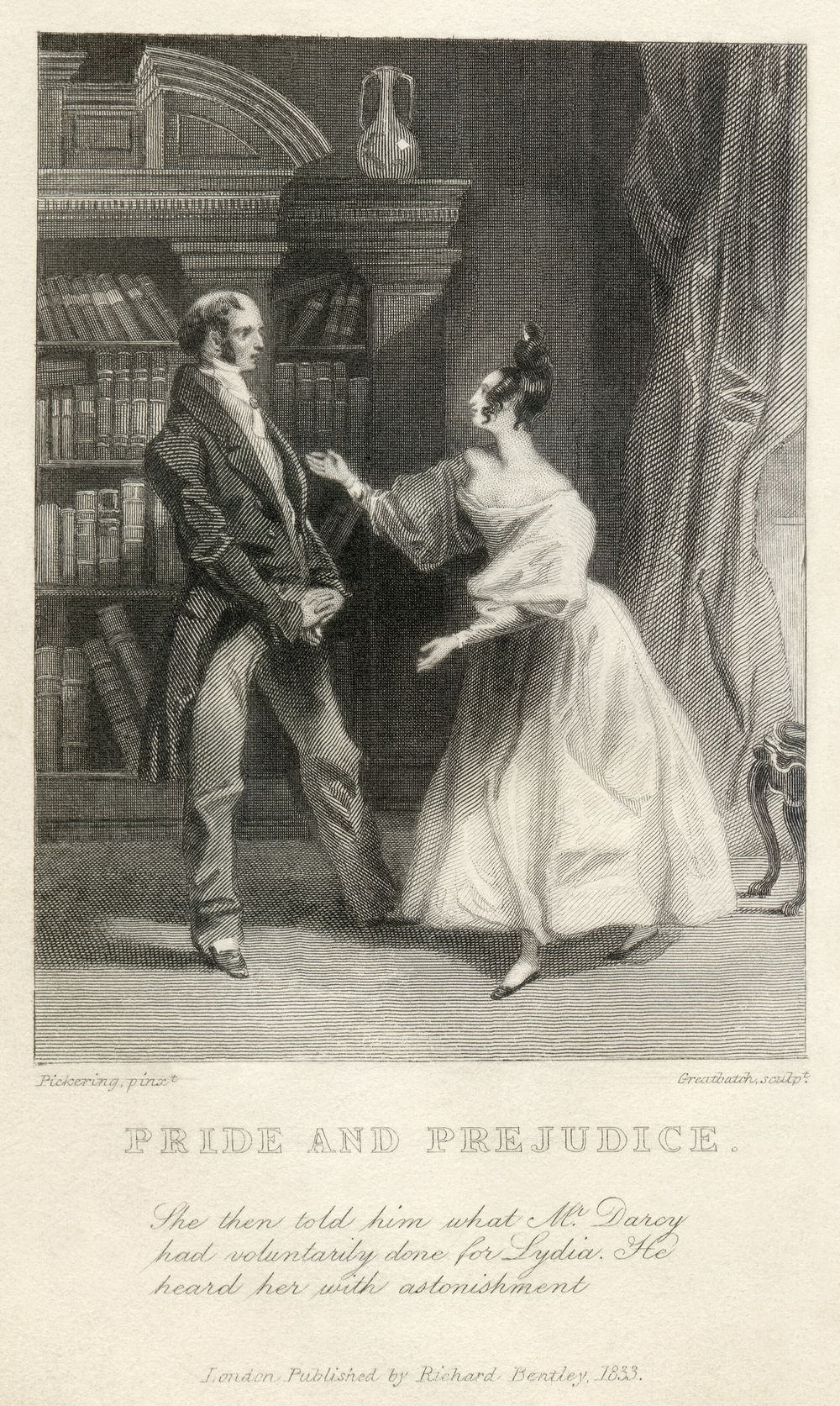
“It is a truth universally acknowledged, that a single man in possession of a good fortune, must be in want of a wife.”[1] It is the most quoted opening in English, and it is a trick. The sentence sounds like a law of nature and is really a piece of gossip, delivered with a straight face. The whole novel works the same way.
What it is
Pride and Prejudice was published on 28 January 1813, and Jane Austen wrote it when she was 20 or 21.[2] It was her third novel to be written and the second to see print; its working title was First Impressions. The book follows the Bennet family of Longbourn in Hertfordshire: five daughters with little money, an estate that can only pass through the male line, and a mother determined to see them married. When a wealthy bachelor takes a nearby house, the neighbourhood begins to calculate.
Why it still works
The plot is a courtship, but the engine is judgement. Almost everyone in the book is sure they have read someone correctly, and almost everyone is wrong in an instructive way. Austen’s irony is generous rather than cruel: she lets Elizabeth Bennet be witty and mistaken at once. “I could easily forgive his pride, if he had not mortified mine,”[1] she says early on, and the line is funny precisely because it admits more than she intends.
Under the comedy sits something harder. Marriage is also a financial arrangement, because daughters cannot inherit the family estate, and the book never lets you forget what is at stake in a drawing room. That is why the romance feels earned: the characters are choosing under pressure, and the choices cost something. The novel is, in the end, about learning to revise a first impression, which is why it keeps its relevance in an age of snap judgements.
Reception and legacy
Pride and Prejudice has consistently appeared near the top of lists of most-loved books among scholars and the reading public, and it has been reported to have sold more than 20 million copies.[2] For more than a century it has been adapted for stage, film and television, and it has inspired a long line of sequels and retellings. Most of them borrow the premise; few capture the voice.
What to know before you start
The pace is conversational. Chapters are short, much of the action happens in talk, and the pleasure is in the phrasing, so read at least some of it aloud. At around 120,000 words it is a longer commitment than some other classics, and a rewarding one. Notes on period terms help but are not required, and the plot is easy to follow without them.
Questions readers ask
Is it only a romance? It is a romance, but also a comedy of manners and a study of class and money; the love story is the way in.
Do I need to know the period? No. A basic sense that women of the time could not easily inherit or earn is enough.
Why is the opening line so famous? Because it states a social “truth” that is plainly a joke, and sets the book’s ironic tone in a single sentence.
Who it is for
Readers who enjoy dialogue-driven stories, social comedy and slow-burning romance, and anyone who has only met the story through adaptations. The book is sharper than most of them.
Verdict
A comedy of manners that is also a clear-eyed study of money and self-deception, and still among the most re-readable novels in English.