The frozen ground that defines the planet's coldest biome
Frigid temperatures, permafrost and short growing seasons shape the tundra across polar and alpine landscapes.
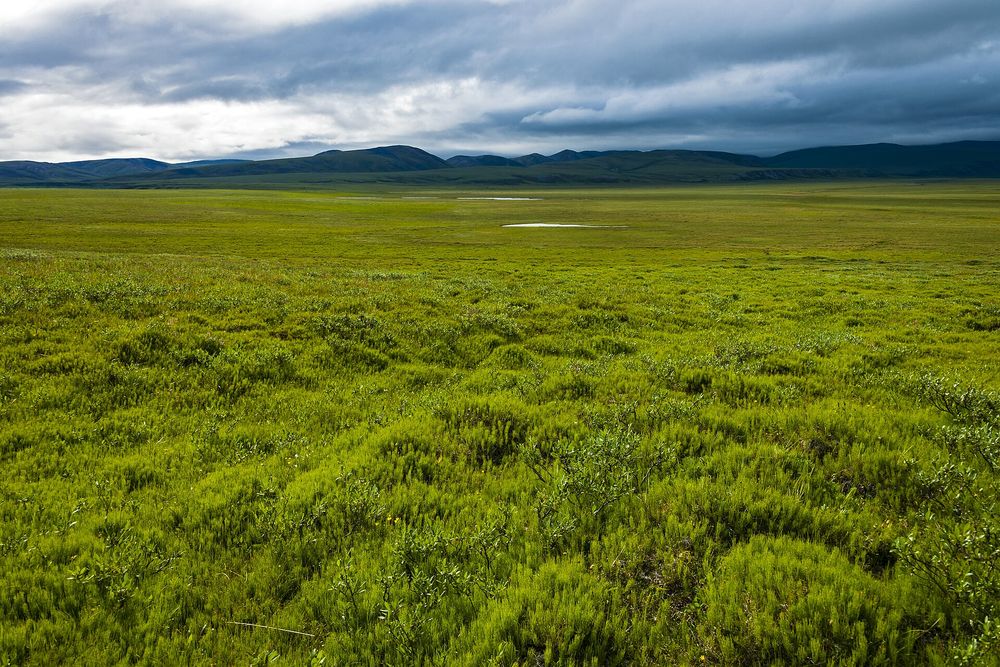
In physical geography, the tundra is defined as a biome where tree growth is hindered by frigid temperatures and short growing seasons, according to Wikipedia[1]. Covering an area of roughly 11.56 million square kilometres (4.46 million square miles), it forms the planet’s coldest terrestrial landscape, spanning polar latitudes and high mountain ranges across three distinct regions: Arctic, Alpine and Antarctic[1].
The word itself entered English in 1824 from the Russian tundra, which likely traces back to the 16th-century Sámi term tundar, meaning an elevated wasteland, fell or marshy plain, or the Finnish tunturi, meaning treeless plain[1]. In climatic terms, tundra climates ordinarily fit the Köppen classification ET, signifying a climate where at least one month averages above freezing (0 °C), allowing snow to melt, but no month exceeds an average of 10 °C[1]. The boundary where forest gives way to this treeless biome is known as the tree line or timberline[1].
The foundation of permafrost
Across much of the Arctic, the landscape is shaped from below by permafrost: soil, rock or sediment that continuously remains below 0 °C for two years or more, according to Wikipedia[2]. Globally, permafrost underlies around 11% of the world’s land surface and approximately 15% of exposed Northern Hemisphere land, covering some 18 million square kilometres across Alaska, northern Canada, Greenland and Siberia[2].
Permafrost sits beneath a surface layer known as the active layer, which freezes each winter and thaws during the brief summer[2]. In the Arctic tundra, the underlying soil remains frozen from 25 to 90 centimetres down, blocking deep root development and preventing water from draining away[1]. Although the Arctic tundra is technically a polar desert—receiving only 150 to 250 millimetres of precipitation each year, with maximum precipitation falling in summer—evaporation is so minimal that thawed meltwater pools into a dense mosaic of marshes, bogs, lakes and streams[1].
Winter on the polar tundra brings dark, windy conditions, with average temperatures around −28 °C and occasional drops to −50 °C, accompanied by winds frequently blowing at 50 to 100 km/h[1]. Yet extreme winter lows on the tundra generally do not plunge as deep as those recorded south of the tree line in boreal taiga forests[1]. In summer, daytime temperatures rise to roughly 12 °C, though they can slip back towards 3 °C or drop below freezing[1].
Life in the cold
Tundra biodiversity is low, supporting roughly 1,700 species of vascular plants and only 48 species of land mammals, according to Wikipedia[1]. Vascular vegetation consists primarily of low-growing plants, including dwarf shrubs, sedges, grasses, mosses and lichens[1]. Notable Arctic plant varieties include crowberry, lingonberry, blueberry, Labrador tea and reindeer lichen[1].
Large herbivores such as muskoxen and caribou (reindeer) wander the northern plains alongside Arctic hares, lemmings, northern red-backed voles, Arctic foxes and snowy owls, while polar bears roam near coasts[1]. Poikilotherms such as frogs and lizards are largely absent due to the cold[1]. Despite sparse resident mammal numbers, millions of migratory birds arrive each summer to nest across the boggy wetlands[1]. Polar tundra regions are also home to nomadic reindeer herders, including the Nenets and Nganasan in northern Russia and the Sámi in Sápmi[1].
Alpine and Antarctic variations
Beyond the Arctic, tundra appears wherever climate blocks tree growth. Alpine tundra occurs across high mountain elevations worldwide, where stunted forest zones at the timberline transition into dwarf vegetation known as Krummholz, according to Wikipedia[1]. Unlike Arctic flats, alpine soils are generally better drained, hosting perennial grasses, cushion plants and forbs adapted to intense ultraviolet radiation and low air temperatures[1]. Alpine permafrost accounts for an estimated 3.56 million square kilometres globally, spanning ranges such as the Qinghai-Tibet Plateau, the Andes, the Alps and the Rocky Mountains[2].
Antarctic tundra occupies ice-free coastal margins and surrounding subantarctic islands, including South Georgia and the Kerguelen Islands[1]. Lacking native land mammals, its flora features 300 to 400 lichen species, 100 mosses, and just two native flowering plants on the Antarctic Peninsula: Antarctic hair grass (Deschampsia antarctica) and Antarctic pearlwort (Colobanthus quitensis)[1].
Accelerating change
Because cold soils slow the decay of organic matter, the world’s tundra permafrost holds vast stores of undecomposed biomass, acting as a massive carbon sink[1][2]. As rising temperatures heat the biome, permafrost thaws, triggering microbial decomposition that releases carbon dioxide and methane back into the atmosphere[1][2].
The Intergovernmental Panel on Climate Change (IPCC) estimates that permafrost carbon release could reach the equivalent of 14 to 175 billion tonnes of carbon dioxide per degree Celsius of global warming, according to Wikipedia[1]. In its 2025 Arctic Report Card, the US National Oceanic and Atmospheric Administration (NOAA) noted that permafrost thaw is already driving widespread transformations across Arctic landscapes, including mobilizing metals into northern waterways—a phenomenon described as “rivers rusting”—and enabling boreal species to shift northward into traditional tundra habitat[3].