Wuthering Heights review: a storm with a house around it
Emily Brontë's only novel is a strange, stormy book about love as a force of nature, told through narrators who may not be reliable.
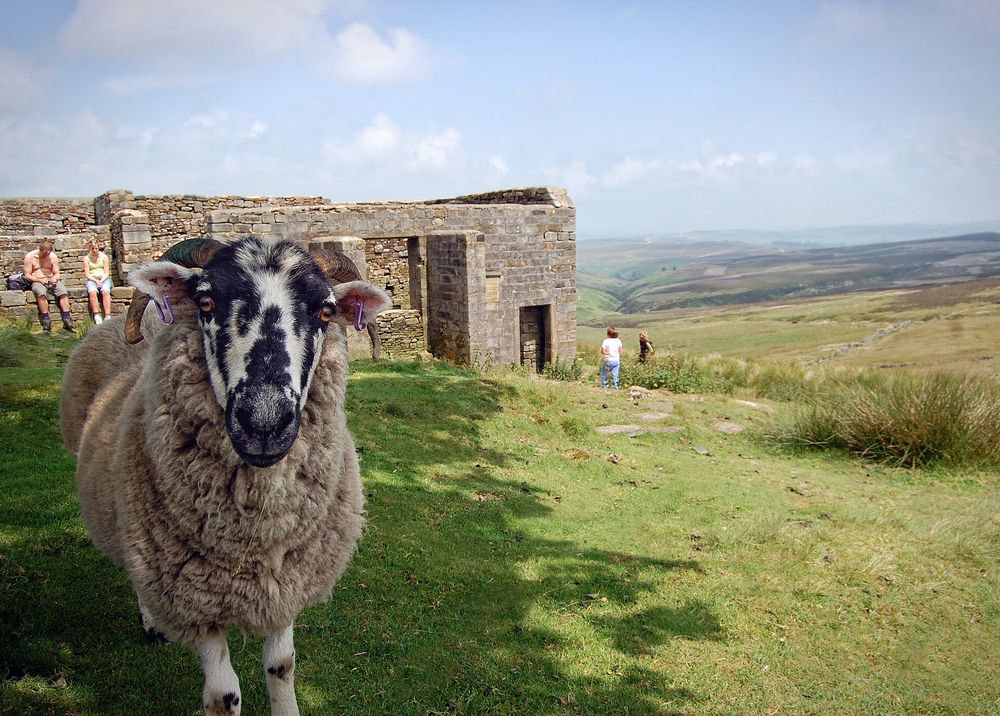
“Wuthering Heights is the name of Mr. Heathcliff’s dwelling,”[1] the novel tells us in its first chapter, and “Wuthering” is “a significant provincial adjective, descriptive of the atmospheric tumult to which its station is exposed in stormy weather.”[1] The book announces on its first page that weather is character here. Everything that follows is a kind of climate.
What it is
Wuthering Heights is the only novel by Emily Brontë, first published on 24 November 1847 under the pen name Ellis Bell.[2] It concerns two upland estates and their landowning families on the West Yorkshire moors, the Earnshaws and the Lintons, and their turbulent relationships with the Earnshaws’ foster son, Heathcliff. It is narrated by a visiting tenant who is told the story by a long-serving housekeeper, so we hear everything at one or two removes.
Why it still works
The nested narration is the key. Neither narrator is neutral, and the novel never tells us exactly how much to trust them. That gap is where its energy lives. The book is fierce about love and cruelty without offering the reassurance of a clear moral, and readers have argued for generations about whom to sympathise with.
It is also physically vivid. Rooms, doors, windows and moorland are drawn with a precision that makes the emotions feel less like opinions and more like events. The result is a gothic novel without the usual machinery: no ruined abbey, only a farmhouse, a hill and the people who will not leave them. Themes of love, possession, revenge and reconciliation are carried by place as much as by plot.
Reception and legacy
Contemporary reviews were polarised, and the book was controversial for its depiction of mental and physical cruelty and for its challenges to Victorian morality, religion and the class system.[2] After Emily’s death, her sister Charlotte edited a second edition, published in 1850. Over time the novel has come to be regarded as one of the greatest written in English, and it has inspired adaptations in many media.
What to know before you start
The opening chapters are the hardest. The narrator is a stranger, the names repeat across generations, and the story does not begin in a straight line. Keep a small family list at hand and let the voices settle. After the first third the book gathers pace and pulls you along. It runs to roughly 110,000 words, and it rewards patience.
Questions readers ask
Is it a romance? It is often sold as one, but it is closer to a tragedy about obsession and revenge; do not expect a conventional love story.
Why is it hard to follow at first? Because the story is told through nested narrators and across two generations with similar names.
Who wrote it? Emily Brontë, under the pen name Ellis Bell; it was her only novel.
Who it is for
Readers who like intensity, atmosphere and morally knotty characters; anyone drawn to moorland landscapes; and those who want a classic that has never quite become comfortable. Our reader’s guide to Dracula pairs well with it.
Verdict
An odd, unforgettable book, unusual in the nineteenth-century novel for how little it flinches.