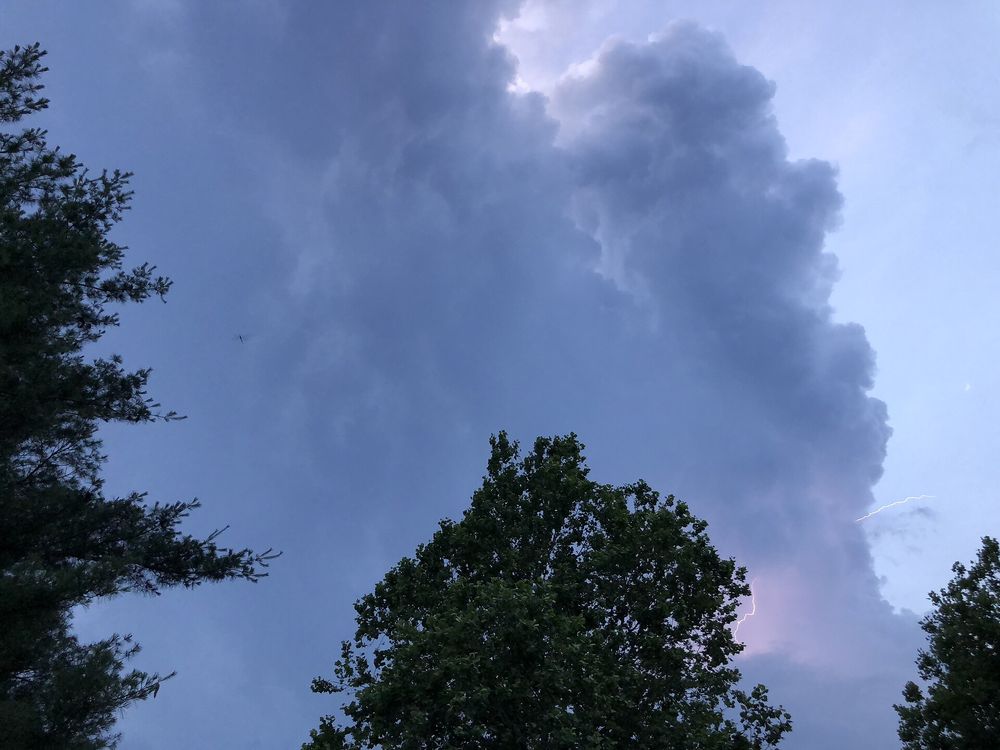
What the northern lights actually are
Auroras appear when solar particles collide with atmospheric gases, producing distinct colours based on altitude and chemistry.
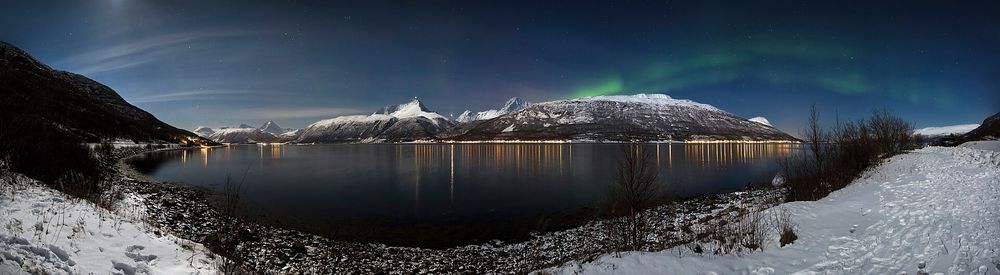
The northern lights, or aurora borealis, are a natural light display triggered when energetic charged particles from the Sun enter Earth’s upper atmosphere and collide with gas molecules, according to NASA[2]. Rather than sunlight bouncing off polar ice, auroras represent the visible consequence of space weather, where solar activity directly perturbs Earth’s magnetic shield[2].
In the southern hemisphere, the phenomenon is known as the aurora australis, or southern lights[1]. Both displays occur within oval-shaped rings surrounding the geomagnetic poles, where Earth’s magnetic structure funnels incoming particles into the upper reaches of the atmosphere[1].
The solar engine and magnetic reconnection
The process begins at the Sun, which steadily releases a stream of charged particles and magnetic fields across interplanetary space known as the solar wind, NASA explained[2]. In addition to this continuous outflow, active solar events such as coronal mass ejections (CMEs) can blast vast clouds of solar material toward Earth in as little as 15 hours[2].
Earth is enveloped by a protective magnetic bubble called the magnetosphere, generated by the churning molten core at the centre of the planet[2]. As the solar wind blows past, it deforms this shield, stretching it out into a trailing wake on Earth’s night side known as the magnetotail[2].
When the magnetic polarity of the incoming solar wind opposes the orientation of Earth’s magnetic field, the opposing field lines can link up in a process called magnetic reconnection, according to NASA[2]. As the solar wind drags these joined lines backwards, they stretch until they snap, releasing stored energy back towards Earth and sending charged particles—primarily electrons and protons—racing down geomagnetic field lines into the polar atmosphere[1][2].
How atmospheric chemistry dictates colour
Once accelerated particles strike Earth’s atmosphere, they collide with ambient gas atoms and molecules, transferring energy to them[1]. As these atmospheric constituents settle back into their ground states, they shed that extra energy by radiating light[2]. The precise hue produced depends on the chemical species struck and the altitude at which the collision occurs[2].
- Green: The most commonly observed auroral shade is green, which NASA notes is emitted by atomic oxygen at altitudes between roughly 100 and 200 km (60 to 120 miles)[2]. The transition occurs at a wavelength of 557.7 nanometres, Wikipedia documents[1].
- Red: High above 200 km (120 miles), atomic oxygen collisions generate a crimson emission at a wavelength of 630.0 nanometres[1][2]. Because human eyes are less sensitive to red light and atomic oxygen is sparser at these extreme elevations, this light is typically visible only during intense geomagnetic activity[1].
- Blue: Nitrogen molecules excited in the 100 to 200 km bracket produce blue emissions, with a dominant wavelength of 428 nanometres[1][2].
- Pink and purple: Below roughly 100 km (60 miles), where the atmosphere grows denser, incoming particles strike molecular nitrogen to produce pink or reddish-purple fringes along the bottom edges of auroral curtains[1][2].
Where auroras occur
Auroras are typically confined to an auroral zone centred roughly 67 degrees north and south of the geomagnetic equator, according to Wikipedia[1]. In northern skies, regular sightings occur across high-latitude territories including Alaska, northern Canada, Iceland, Greenland, the Faroe Islands, Scandinavia, Finland, Scotland, and northern Russia[1]. In the southern hemisphere, displays appear over Antarctica, Patagonia, New Zealand, southeastern Australia, and the Falkland Islands[1].
When powerful coronal mass ejections strike the magnetosphere, the disturbances trigger broad geomagnetic storms that temporarily expand the auroral oval toward lower latitudes[1][2]. Historically, during the 1859 Carrington Event—the most intense geomagnetic storm on record—auroral displays expanded into tropical skies[1]. Under modern observing programmes, the NOAA Space Weather Prediction Center models the auroral oval using measurements from the L1 Lagrange point to provide forecasts with 30 to 90 minutes of lead time[1].